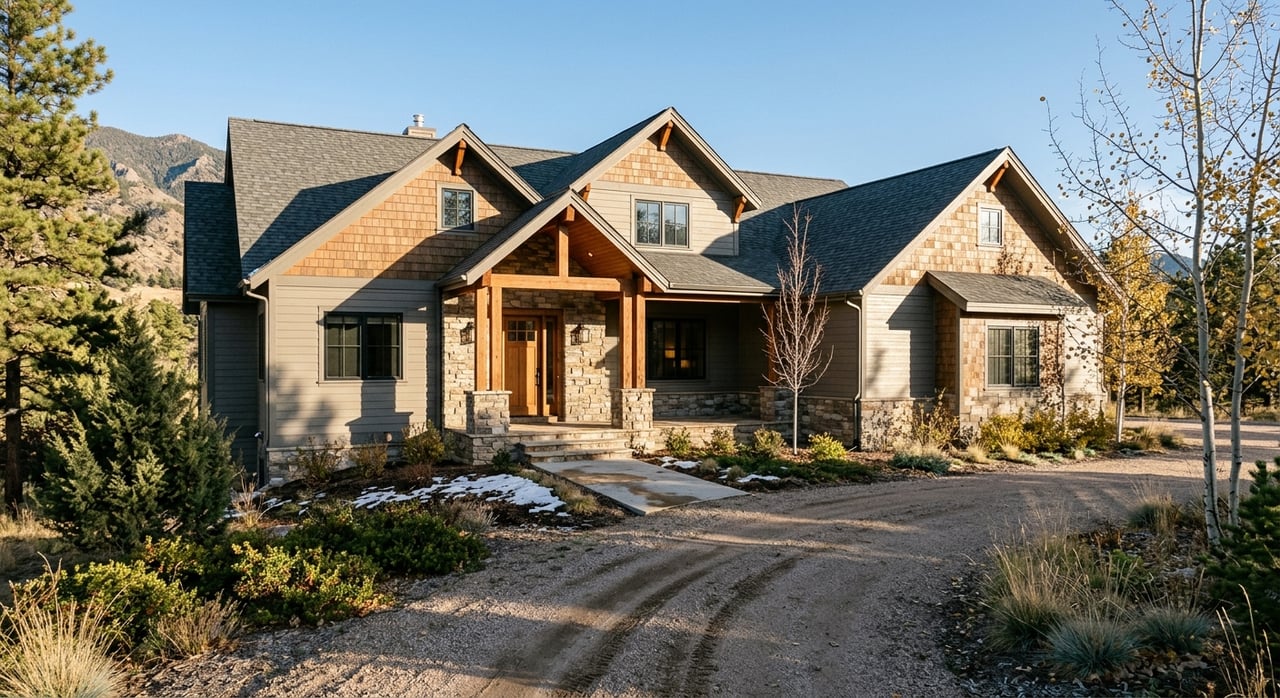
If a second home in Evergreen is on your wish list, you are not alone. The appeal is easy to understand: mountain character, quick access to Denver, and a mix of cabins, cottages, and lodge-style homes that feel like a true getaway. But buying here takes more than falling in love with the view, and this guide will help you focus on the details that matter most before you move forward. Let’s dive in.
Why Evergreen draws second-home buyers
Evergreen is a mountain community at about 7,200 feet, close to Denver, with a housing market that reflects strong demand. The Jefferson County Economic Development Corporation community profile currently lists a median home price of $1 million.
For many buyers, that combination of mountain setting and metro access makes Evergreen a natural fit for a personal retreat, a seasonal home, or a property you may also want to use part-time in the future. The key is understanding that ownership here often comes with mountain-specific logistics that are different from a typical in-town purchase.
Evergreen homes have a historic mountain feel
Evergreen's housing character is rooted in its history as a summer-resort area. According to Jefferson County's historic tourism brochure, the area included rustic cabins, picturesque cottages, elaborate stone lodges, and summer-home subdivisions, with many cabins later converted to year-round residences.
That history still shapes the kinds of properties second-home buyers often look for today. In practical terms, your search may center on rustic cabins, lodge-style homes, cottages, or older summer-home properties with unique construction and site conditions.
Start with parcel-by-parcel research
One of the most important things to know is that Evergreen is not a one-rule-fits-all market. A Colorado State Forest Service community wildfire protection plan notes that Evergreen is unincorporated, split between Jefferson and Clear Creek counties, and served in part by special districts rather than a city government. That means property-level jurisdiction matters before you assume any single set of rules applies.
For you as a buyer, this affects more than paperwork. It can shape access requirements, utility questions, wildfire expectations, and whether future plans for remodeling or rental use are realistic.
Confirm the county and local oversight
Before you get too far into a purchase, confirm whether the parcel is in Jefferson County or Clear Creek County. You will also want to identify any HOA, special district, fire protection district, or road agreement tied to the property.
This matters because the rules, permits, and approvals tied to the home may depend on the exact parcel location. In Evergreen, due diligence is often less about the zip code and more about the lot itself.
Road access matters more than many buyers expect
In mountain areas, road access is a major ownership issue, especially if you plan to use the property year-round. Jefferson County's snow and ice control page explains that mountain-area plowing does not occur between 9 p.m. and 3 a.m., lower-priority roads may not be plowed after smaller storms, and driveway approaches are the owner's responsibility.
That means two homes with similar square footage and price can offer very different day-to-day ownership experiences. A property on a county-maintained road may function very differently from one that relies on a private road or easement.
Ask how the property is reached
When you evaluate a second home or cabin, ask these practical questions early:
- Is the home on a county-maintained road?
- Does access depend on a private road or recorded easement?
- Who handles snow removal?
- Is the driveway steep, narrow, or difficult in winter?
- Are there any shared road-maintenance obligations?
If you plan to renovate or build, access becomes even more important. Jefferson County requires driveway and access permits plus inspections for certain work, and mountain properties may also require private-road or driveway approval, fire-district access review, and defensible-space review.
Budget for mountain maintenance
A second home in Evergreen can offer a wonderful escape, but it also needs a realistic maintenance plan. Snow removal, mailbox clearance, road access, and storm response should be part of your annual budget, not an afterthought.
This is especially true if you do not plan to live in the home full-time. You may need local help to keep the property accessible and to respond quickly during changing weather conditions.
Plan beyond the house itself
Mountain ownership costs often extend beyond the structure. Depending on the property, your checklist may include:
- Driveway plowing
- Roof snow management
- Private road coordination
- Seasonal exterior maintenance
- Utility monitoring during vacancy
- Tree and slash management around the home
These items may not be deal-breakers, but they should be priced into your decision from the start.
Wildfire risk should shape your buying strategy
Wildfire planning is part of owning in Evergreen. Jefferson County's wildfire information page encourages residents to know more than one way out, enroll in emergency alerts, and remove slash around the home.
The county's Wildfire Commission also states that more than two-thirds of Jefferson County lies in a Wildfire Hazard Overlay District and identifies Evergreen as one of the county's highest-risk areas. It further notes that evacuation planning cannot rely on pre-scripted routes because fire behavior and terrain vary.
What that means for second-home buyers
If you are buying a cabin or second home, think about wildfire risk as an ownership planning issue, not just an insurance topic. Ask how defensible space has been maintained, how emergency access works, and whether the property offers more than one practical route out.
If you will not be in the home full-time, your plan should also include who monitors the property, handles slash removal, and helps keep the site prepared.
Check water, sewer, and permit status
Mountain homes often have utility setups that differ from suburban properties. Depending on the parcel, the home may rely on a well, an onsite wastewater treatment system, public utilities, or some combination.
That is why it is smart to confirm permit status and system details before you buy. If your long-term plan includes rental use, additions, or major upgrades, these details can become even more important.
Review the basics early
Ask for documentation on:
- Well permits, if the property uses a well
- Septic or OWTS permits, if applicable
- Any recent use permits or inspections
- Utility providers and service records
- Whether the existing systems support your intended use
A charming cabin can look simple on the surface while carrying more infrastructure questions than a standard residential property.
Think carefully about rental plans
Some second-home buyers want a private retreat only. Others want the option to rent the property occasionally. If rental potential matters to you, make sure you understand the rules before you buy.
Colorado defines a short-term rental as lodging rented for less than 30 days, according to the state's short-term rental guidance. In Jefferson County, Section 46 governing short-term rentals was adopted in December 2025 and became effective February 2, 2026.
Jefferson County short-term rental rules
Under Jefferson County's short-term rental rules, a license is required before advertising or operating a short-term rental. The rules also include several operational and property-specific requirements.
Key points include:
- Only certain dwelling types qualify
- Only one STR license is allowed per property
- Simultaneous rental to multiple parties under separate contracts is prohibited
- A local representative must be within 30 minutes
- The property must be in a fire protection district
- Ads must show the county license number and occupancy limits
- At least $500,000 in fire, hazard, and liability coverage is required
Applicants must also provide a parking plan, trash-removal plan, proof of adequate water and sewer, proof of defensible space, and proof that road access is sufficient for emergency vehicles.
Extra limits for non-primary residence rentals
If the property would be an investment or non-primary-residence STR, there are additional restrictions. Jefferson County states that an owner may have an ownership interest in no more than one non-primary-residence STR at a time, and those licenses are subject to a 750-foot separation requirement and a 1% fire-district capacity allowance.
Primary-residence STRs are exempt from those two rules. For a second-home buyer, this distinction matters because a property that seems rentable in theory may not qualify in practice.
Private rules can still apply
County approval is not the only thing to review. Jefferson County also requires STR applicants to notify any HOA or special district, and the county states that private rules are not overridden by county licensing.
In other words, if a neighborhood covenant, HOA rule, or access agreement limits rentals, county licensing does not cancel those restrictions. This is one more reason second-home purchases in Evergreen need careful due diligence.
Understand tax and insurance implications
If you plan to rent the property for fewer than 30 days at a time, Colorado says those accommodations are taxable. The Colorado Department of Revenue states that anyone offering such accommodations must obtain a sales tax license and collect sales tax on taxable rentals, and county lodging tax or visitor benefit tax may also apply.
Property tax treatment may also vary based on how the home is used. Under Colorado House Bill 24-1299, a short-term rental unit that is the owner's primary or secondary residence remains residential property, while a commercial STR is classified as lodging property, with annual affidavits required by the county assessor.
Insurance should also be part of your planning. If your use includes short-term rental activity, ask your insurance provider how that use may affect coverage requirements and cost.
Questions to ask before you buy
When you are comparing second homes or cabins in Evergreen, these are some of the smartest questions to put on your checklist:
- Is the parcel in Jefferson County or Clear Creek County?
- Which HOA, special district, or fire district applies?
- Is access from a county-maintained road, private road, or easement?
- What are the snow removal and road maintenance expectations?
- Does the property use a well, septic, OWTS, or public utilities?
- Are all permits and system documents current?
- How has the property been prepared for wildfire risk?
- If you may rent it, would it qualify under current county STR rules?
- Could rental use affect insurance, taxes, or maintenance costs?
- If your plans change later, does the property still make sense?
A second home should support your lifestyle, not surprise you with avoidable issues after closing.
A smart Evergreen purchase starts with the right guidance
Buying a second home or cabin in Evergreen can be incredibly rewarding, but the best purchases are grounded in careful research. In this market, the details around access, jurisdiction, wildfire exposure, utilities, and future rental use can matter just as much as the home itself.
If you want experienced, local guidance as you explore Evergreen and the foothills, connect with Glenn Janda. Glenn brings a consultative approach, strong local market knowledge, and clear, practical advice to help you evaluate properties with confidence.
FAQs
What should you verify before buying a second home in Evergreen?
- You should verify the parcel's county, road access, utility setup, permit status, wildfire considerations, and any HOA or special district rules tied to the property.
Can you use an Evergreen cabin as a short-term rental?
- Possibly, but you need to review current county rules, licensing requirements, property qualifications, fire district status, access standards, and any HOA or private restrictions before assuming the property can be rented.
Why is road access so important for Evergreen second homes?
- Road access affects winter usability, snow removal responsibilities, emergency response, renovation approvals, and the overall convenience of owning the property year-round.
Do Evergreen second-home buyers need to think about wildfire risk?
- Yes. Wildfire planning is a major part of ownership in Evergreen, including defensible space, evacuation planning, emergency alerts, and understanding the property's access and surrounding conditions.
Are utility systems different in Evergreen mountain properties?
- They can be. Some properties may rely on wells, septic or OWTS systems, or a mix of services, so you should confirm the property's setup and make sure permits and records are current.